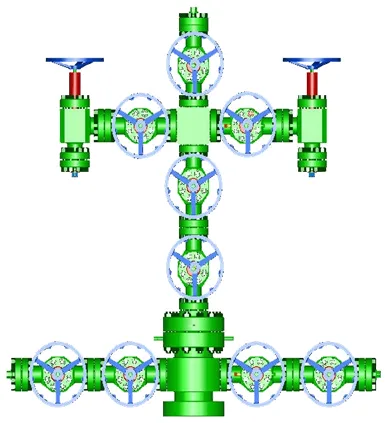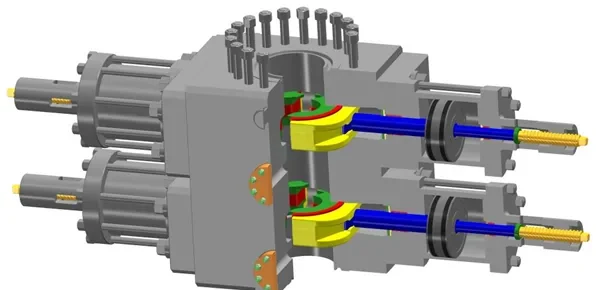
We choose a wellhead and a BOP stack by the pressure the well can deliver, the temperature it runs at, and whether the gas contains H2S. Everything else is connection detail.
Start with the maximum anticipated surface pressure, not the reservoir pressure. A gas well with a 0.9 gas gradient at 4,000 m can deliver close to 35 MPa at surface after shut-in; the same depth in an oil well may not exceed 25 MPa. The pressure class is the next standard step above that number: 3,000, 5,000, 10,000, 15,000 or 20,000 psi under API 6A.
Temperature class follows the flowing temperature, and it is not cosmetic. Class P covers -29 to 82 C, class U covers 0 to 121 C, class V covers 2 to 121 C. Selecting a lower class than the well runs at invalidates the pressure rating, because the material yield strength falls with temperature.
| Class | Working pressure | Typical use |
|---|---|---|
| 2,000 psi | 13.8 MPa | low pressure completion, water injection |
| 3,000 psi | 20.7 MPa | shallow oil wells, workover |
| 5,000 psi | 34.5 MPa | standard land completion |
| 10,000 psi | 69.0 MPa | deep land, high pressure gas |
| 15,000 psi | 103.5 MPa | HPHT gas, sour high pressure |
| 20,000 psi | 138.0 MPa | extreme HPHT, special order |
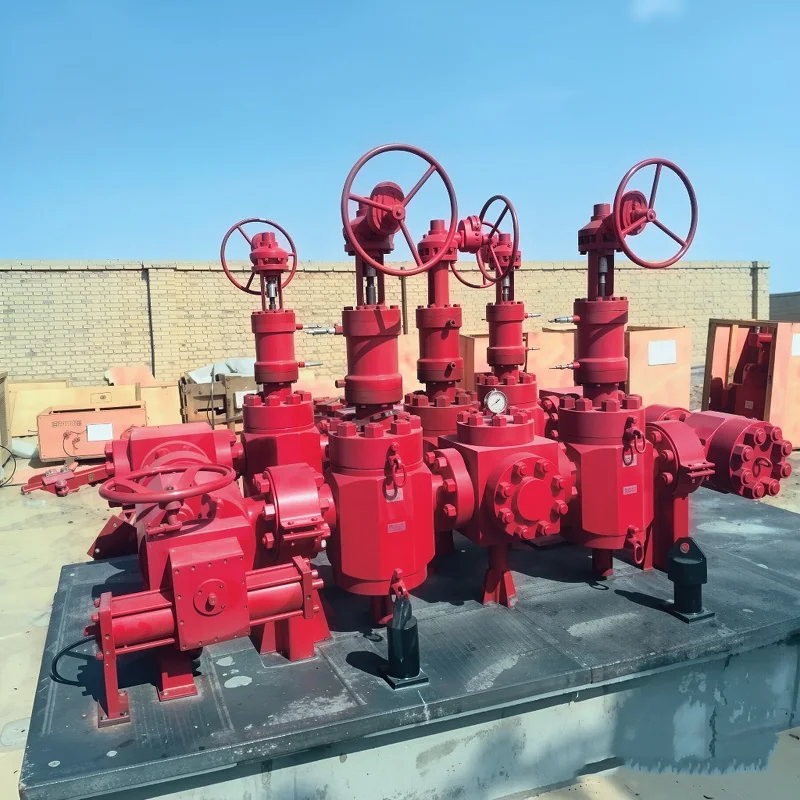
Annular or ram is a stack design question rather than a product question. A single annular BOP handles routine tripping and stripping; a ram plus annular stack is needed where the pipe is irregular, where hang-off is required, or where the well control plan calls for a shear ram. Most land stacks are annular over a single ram with a drilling spool between them.
Before release, we ask for three documents: the API 6A monogram with the class and temperature range on the body, the NACE MR0175 compliance statement for sour service, and the pressure test record at the class pressure with the hold time. If any one of them is missing, we treat the stack as uncertified at the first audit.
Model
Model
Application
Service
From the maximum anticipated surface pressure, plus a margin, rounded up to the next API 6A class. A 32 MPa shut-in pressure on a gas well becomes a 5,000 psi stack; 37 MPa becomes 10,000 psi.
When the partial pressure of H2S exceeds 0.05 psi, or when the operator's specification calls for it regardless. Above that threshold the wetted parts have a hardness limit and a defined heat treatment.
Yes. Class U and V hold the full rating to 121 C; class P is limited to 82 C. A stack run hotter than its class has a reduced working pressure even if the body is marked for the higher class.
No. Above 10,000 psi the standard connection is API 6BX, and a 6B to 6BX adapter is a leak path at the class pressure. We do not supply one for that duty. The stack, the spool and the wellhead have to share the same connection type.
We choose a wellhead and a BOP stack by the pressure the well can deliver, the temperature it runs at, and whether the gas contains H2S. Everything…