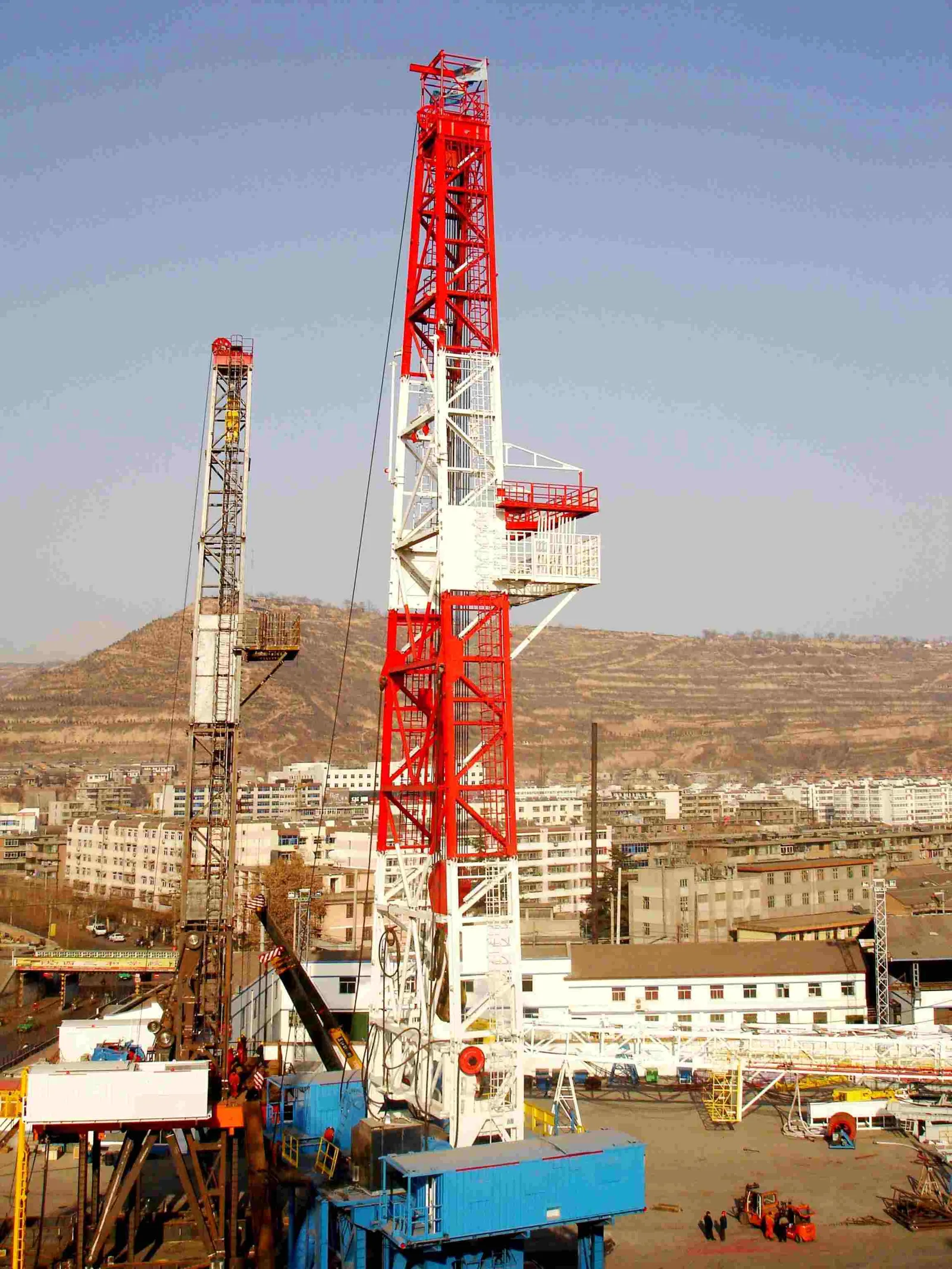
Land programmes are decided by two numbers before the first well is spudded: how many days the rig takes to move, and how many hours the fluid end runs between failures.
A 3,000 m development well on a multi-well pad spends more time being moved than being drilled if the rig is the wrong shape. That is why the package is specified backwards from the programme: number of wells, spacing, road limits between locations, and the deepest interval that has to be drilled in one run.
The onshore drilling range covers 1,000 m truck-mounted units for water and shallow oil wells, mechanical rigs to about 7,000 m, DC electric rigs with SCR transmission, AC variable-frequency-drive rigs to 12,000 m for ultra-deep gas, and slant rigs for pads under towns, swamp and beach terrain. Output runs to about 100 rigs and 800 mud pumps a year from the same workshops that supply desert and offshore contracts in the Middle East, North Africa and Central Asia.
A rig is only as good as the parts around it, so the quotation normally covers the hoisting system, the fluid end, the solids control circuit and the drill string as one scope. Modules are weighed and dimensioned for the transport permits on the road between locations, which is a design input rather than a shipping detail.
We build the rig, the mast and the fluid end in the same works, so we can hold the interface to one drawing set. Our engineers set the rating point at commissioning against your fuel and altitude, we hand over the signed test sheet with the unit, and we keep the drawings current for its working life. Onshore drilling packages for desert and mountain work share the same mast and pump modules, which is why we keep one spares set across both.
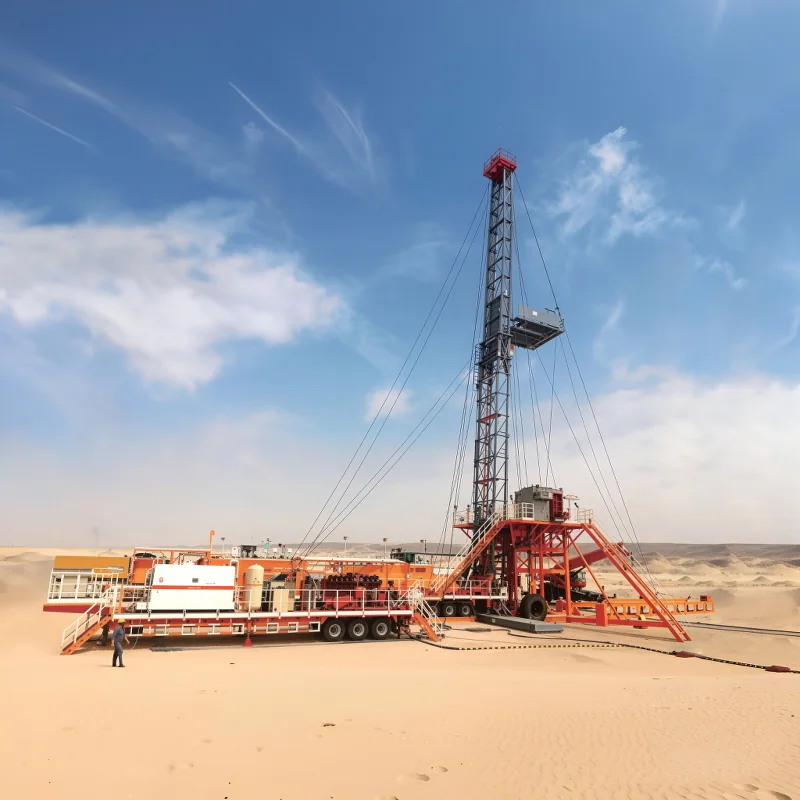
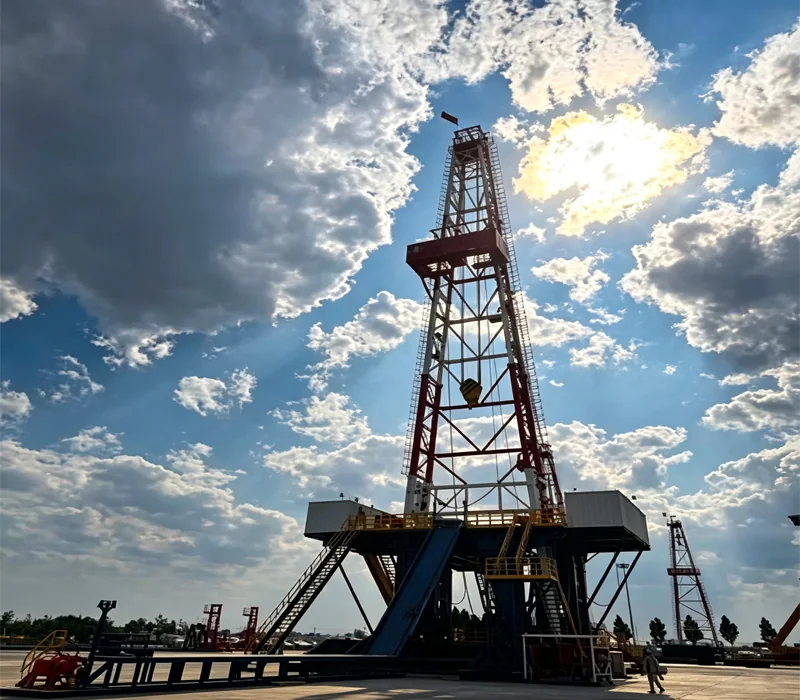
Most truck-mounted work sits between 1,000 and 3,000 m. Beyond that the mast height, substructure capacity and pump size push the programme towards a mechanical or electric rig, and the move to a pad layout usually comes at the same time.
On pad drilling, long laterals and wells where weight on bit has to be held precisely. The drive holds torque at low speed, which keeps the bit loaded through connections, and the smaller footprint matters when the substructure has to walk between well slots.
Yes. Many customers take the rig from one supplier and the fluid end from another, so pumps, skids and control are quoted as a standalone package with its own datasheet and test record.
Drilling Equipment carries the main duty, High Pressure Flow Control covers the pressure side, and we quote the three as one scope where they meet on a location.
Product line
Product line
Product line
Product line
System
Land programmes are decided by two numbers before the first well is spudded: how many days the rig takes to move, and how many hours the fluid end…