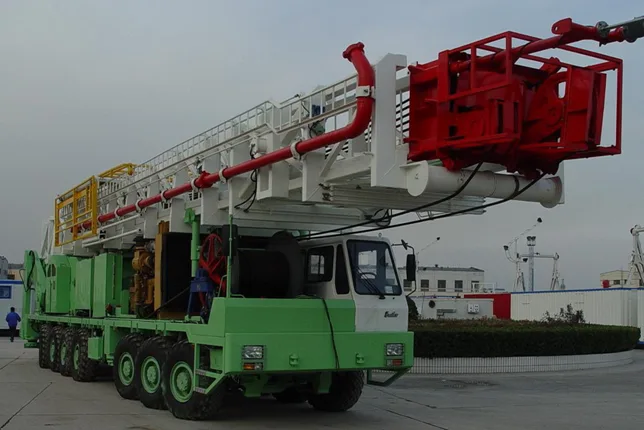
A package arrives as crates. What decides whether it runs is who is standing on the location when the last bolt is tightened.
Commissioning is a checklist before it is a visit: module weights and lift points, alignment of the drive train, hydraulic and pneumatic schematics, control logic against the function list, and the pressure test on the fluid end. The engineer who signs that sheet is the one who has to answer for the first well.
Our field engineers travel from the Baoji works or from the regional service centres in the UAE, Kuwait, Oman, Saudi Arabia and Egypt, depending on where the equipment is going and how quickly it has to be there. For a first-of-type package the engineer stays through spud and the first connection, because the issues that appear in the first 24 hours are usually interface issues rather than equipment faults.
The visit is documented: commissioning report, as-found and as-left readings, punch list, and the settings recorded for the next crew. That file is what makes the second unit faster to commission than the first.
We send the engineer who commissioned the package back for the first service visit, because he knows which settings were left where. Our reports record as-found and as-left readings, we brief the operating crew at handover, and we keep the file open for the next visit.
It depends on the contract scope. Most packages are quoted with a fixed number of commissioning days plus a day rate beyond that, so the budget is known before mobilisation.
From the regional service centres the usual route is a commercial flight plus road transfer; the exact window is agreed when the visit is scheduled, because visa and site-access paperwork often set the pace rather than travel.
For control and instrumentation issues, yes: the control logic and settings can be reviewed from drawings and logs. Mechanical work still needs someone on the floor.
Contact
Service
Service
System