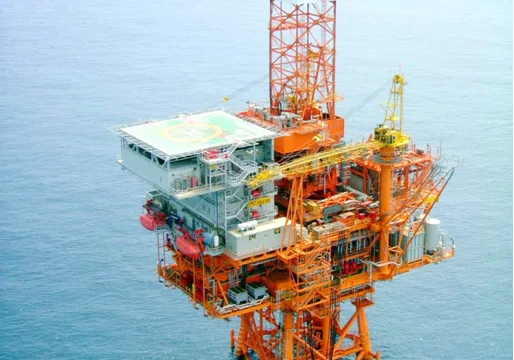
Offshore work is decided by deck area before it is decided by horsepower: the crane envelope is fixed, the hatch is fixed, and the module has to pass through both.
That constraint shapes the package. A 7,000 m DC electric rig module is laid out so it can be assembled, operated and maintained inside the deck area available, with a bottleneck tower mast or a telescoping mast instead of a conventional guyed structure. Tower masts carry more load in less footprint and need no guy wires, which keeps the crane envelope clear during installation and later maintenance.
Rig movement uses a friction or ratchet walking system that shifts the module in four directions on the deck, so batch drilling from one platform position runs continuously instead of stopping for a skidding contractor. Drawworks driven by twin DC motors hold speed regulation and power factor through each connection, and the brake package combines a high-torque hydraulic disc with electromagnetic eddy-current or disc auxiliary braking.
For workover duty the HXJ158 was developed for platform main-deck installation: 33 m tower mast, no guy wires, cantilever travel to the well slot. The configuration repeats on other platforms with different slot spacing, which is what makes it a product rather than a one-off.
Hull side, the CP series covers bottom-supported, cylindrical-leg and truss-leg jack-ups to a maximum self-elevating water depth of 91.4 m, classed with CCS, ABS or DNV, and takes platform rigs up to a 9,000 m (3,000 hp) rating. Hull and drilling package come from the same works, so the interface between them is one scope rather than two contracts.
We assemble and test the module before it is broken down for shipment, because a deck that will not take the lift cannot be fixed later. Our engineers travel to the platform for the first rig-up, we set the walking sequence with the driller, and we leave the as-built drawings on the platform. We hold that lifting plan for the next campaign, and our engineers review it against the new deck before the module ships.

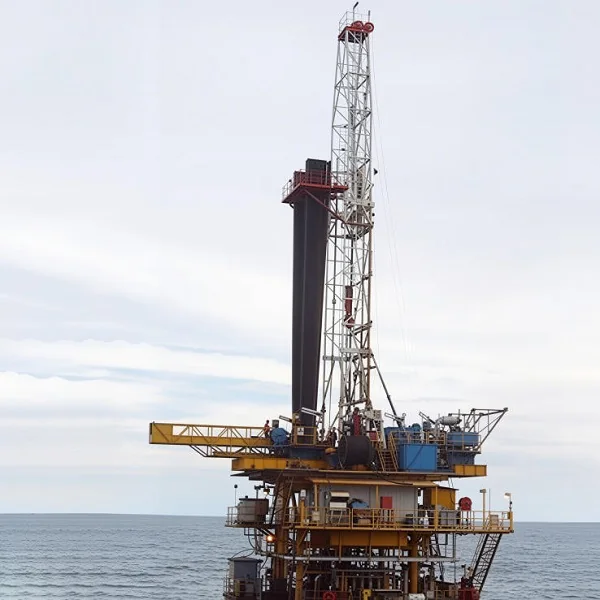
It carries more load in less deck area and needs no guy wires. On a platform the crane envelope is shared with everything else being lifted, so removing the guys removes a permanent obstruction, not just an installation step.
It moves the module between well slots without a crane or a skidding contractor, so a batch programme runs slot after slot without a break for rigging. That is usually the difference between a platform campaign finishing inside its window or not.
Sometimes, but the enclosure, escape routes, wind walls and brake duty all change. It is normally cheaper to specify the platform module from the start than to convert a land package after the deck layout is fixed.
Offshore Equipment carries the main duty, Jack-Up Drilling Platforms covers the pressure side, and we quote the three as one scope where they meet on a location.
Product line
System
System
Product line
Model
Offshore work is decided by deck area before it is decided by horsepower: the crane envelope is fixed, the hatch is fixed, and the module has to pass…