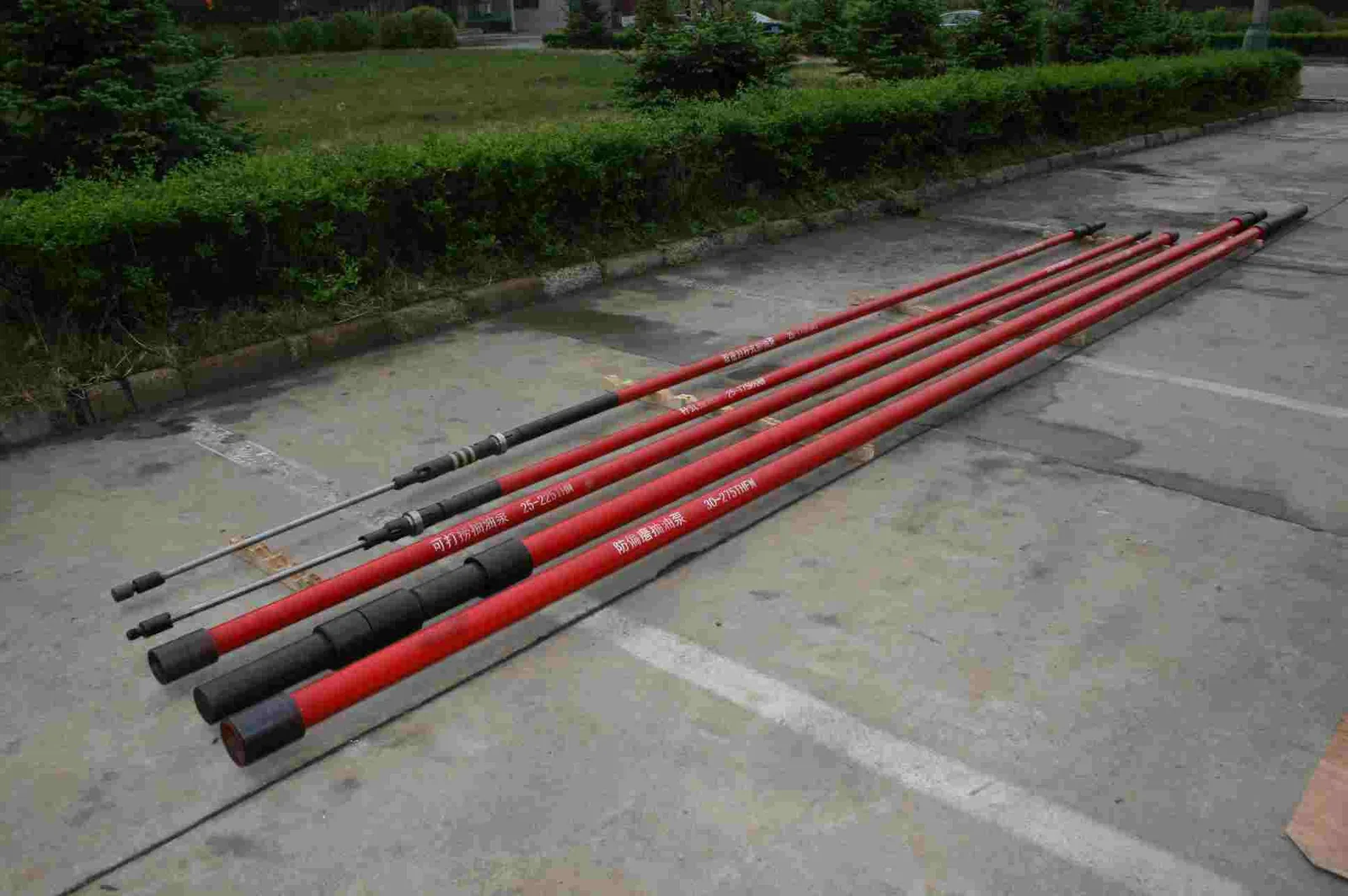
Tubing and insert sucker rod pumps, hollow and solid rods, steam injection boilers and vacuum insulated tubing for heavy, viscous and waxy crude.
Artificial lift is decided below the wellhead, and the equipment that does the work is the pump, the rod string and the tubing it all hangs in. We supply the complete set: tubing pumps and insert pumps for beam and screw installations, solid and hollow sucker rods, and the insulated tubing and steam generators that make heavy-oil production possible in the first place.
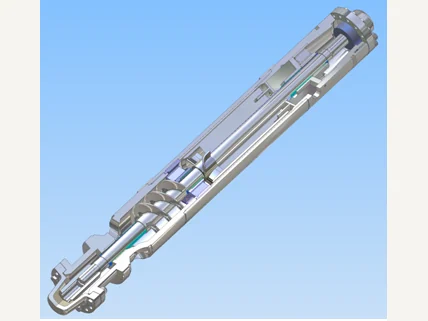
The pump choice is a mechanical question before it is a commercial one. A tubing pump puts the barrel on the tubing and the plunger on the rods, so a larger bore fits the same casing and the displacement is higher; an insert pump goes down whole on the rods and locks into the tubing, so a pump change is a rod job and the tubing stays in the hole. On sand-prone wells the top hold-down pumps are specified because the discharge scours the annulus; on deep wells the bottom hold-down version is preferred because the barrel sees external pressure only and the clearance stays put.
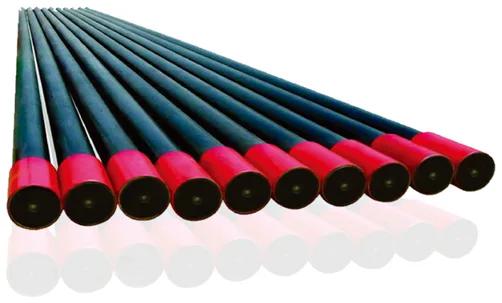
Rods carry that load, and the two failure modes we design against are broken pins and connections that back off. Both the solid and the hollow string use extruded rather than cut threads, and the bodies, heads and couplings are quenched and tempered alloy steel supplied as a matched set. The hollow rod is more than a rod: the internal passage carries heat, cable or fluid, which is how electrical heating, hot-carrier injection and tubing-free production are done, and its stiffness lets it drive a downhole screw pump from surface.
When we quote this line we ask for the casing programme, the pump setting depth, the sand and gas conditions and how often the well gets pulled, because those four answers decide the bore, the hold-down and the rod grade before price comes into it. Our quotation states the pump bore and the rod grade we recommend, and names the alternative where a cheaper string would shorten the pulling interval.
Most of the lift questions we answer come down to one exchange: what the casing will pass, and how often the well gets pulled. Everything else in this line is arranged around those two answers.
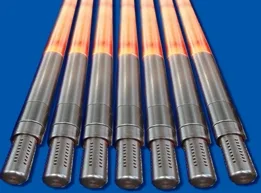
Sucker Rod Pumps
Sucker Rod Pumps
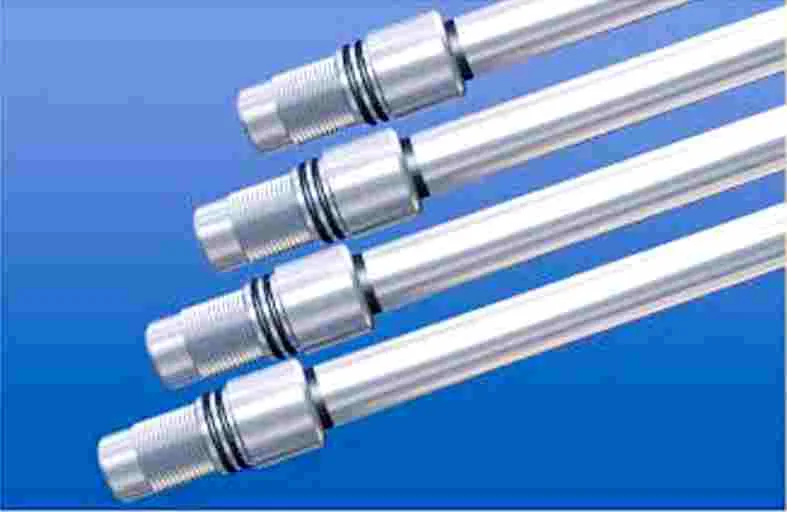
Sucker Rods
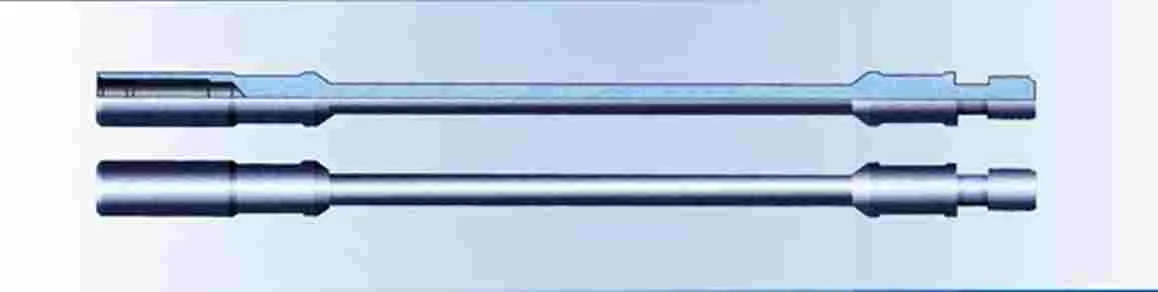
Sucker Rods
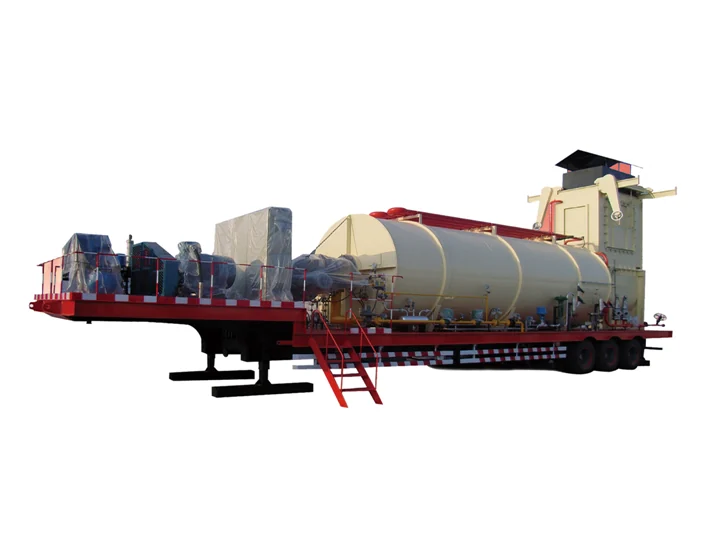
Thermal Recovery
Thermal Recovery
Artificial lift system
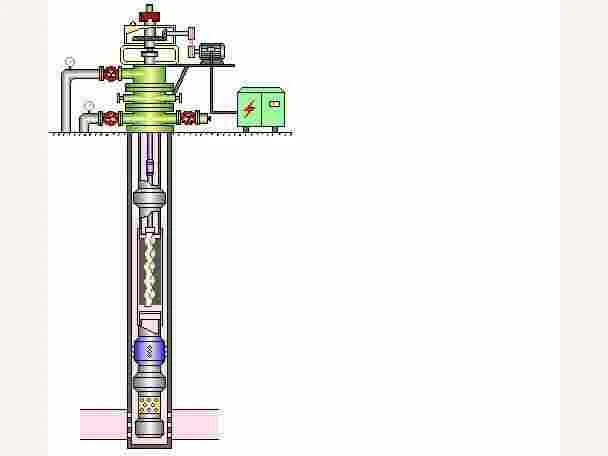
Artificial lift system
If displacement matters and the casing allows a larger bore, the tubing pump wins. If the well is pulled often and the tubing should stay in the hole, the insert pump wins, because the whole pump comes out on the rods.
When the completion needs electrical heating, hot-carrier injection, tubing-free production, or a screw pump driven from surface. The internal passage is what makes those completions possible.
Grade D covers most beam-pumping service; grade HL is chosen where the string is long enough that fatigue at the pin becomes the limiting factor.
Bare tubing loses steam quality on the way down and puts thermal stress on the casing and cement. The vacuum annulus keeps the heat in the steam and the stress off the completion.
Yes. Where a field calls for it, the group's electric submersible pump manufacturer supplies pump, motor and cable as one string, and we size the wellhead and the surface equipment around it. Acting as an ESP system supplier for the complete installation, the same team quotes the transformer, the switchboard and the downhole sensor with the pump.
A PCP pump oil well is quoted where viscous or sandy crude rules out beam lift. A progressive cavity pump manufacturer in the same group builds the rotor and stator pair, and the PCP surface drive head is matched to the rod string and the motor before the well is completed.
An ESP pump for oil well duty runs on a submersible motor oilfield winding that is cooled by the flow past the motor housing; the cable, the seal section and the intake are quoted as one string with the pump.
We quote the pump, rod string and accessories as one assembly so the load path is calculated end to end. Give us the deviation survey and we will tell you where rod guides are needed.
The first figure to settle is the pump bore that the casing will take. A tubing pump puts the barrel on the tubing and can often run one size larger than an insert pump in the same casing, which raises displacement without changing the surface unit. If the well is pulled often enough that a tubing job is a production loss, we recommend the insert pump even at the smaller bore.
Rod grade follows from the polished-rod load and the pumping speed. Grade D covers the majority of beam-pumping service; grade HL is specified where the string is long enough that fatigue at the pin becomes the limit. On corrosive service we agree the chemistry of the rod and the coupling with the operator before the string is ordered, because a mixed string fails at the weakest connection rather than at the average.
For thermal wells, the steam rate the pattern needs decides the boiler size and whether a stationary unit or a trailer-mounted one is justified. Insulated tubing is then sized on the depth at which steam quality has to be maintained: the vacuum annulus is pre-stressed to take the differential expansion, and the getter keeps the vacuum from degrading over the life of the string.
Anchor depth, pump clearance, gas interference and sand entry are all checked against the completion drawing before we issue a quotation. Those four figures, not the catalogue, decide whether the pump will run to its rated displacement in the well.