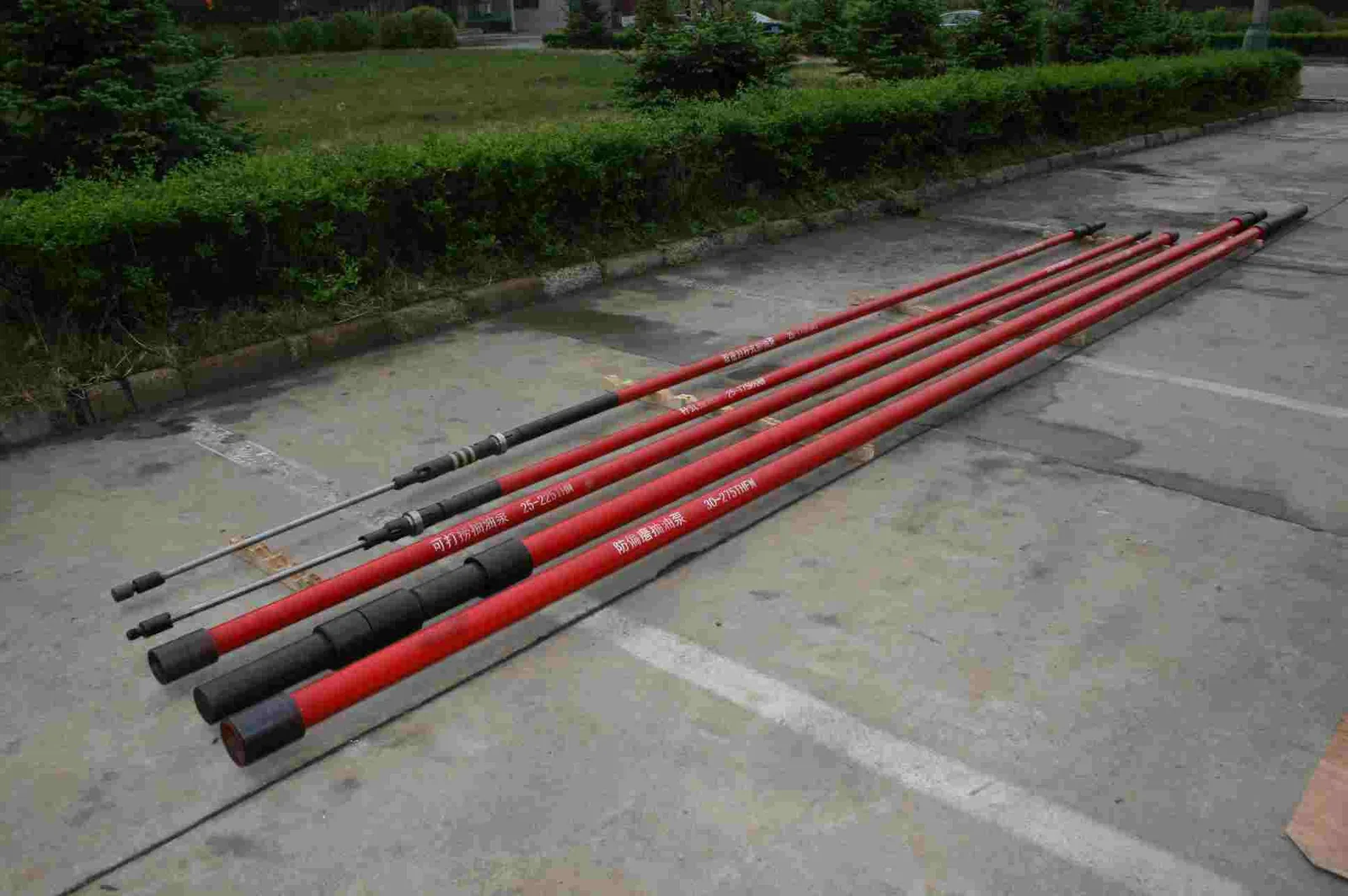
Both pumps lift liquid from the bottom of the well. In our quoting experience the choice turns on rate, viscosity and what the well does to the pump rather than on the pump itself.
An ESP is a multistage centrifugal pump driven by a downhole motor on a cable. It produces volume, and it produces it from depth: 50 m3/d in a small unit up to 2,000 m3/d from 3,000 m is routine. It is also the most demanding lift method on power quality, on cable handling and on the fluid it passes.
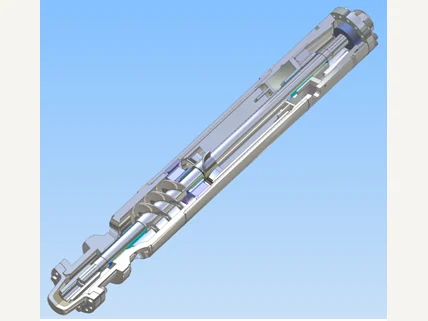
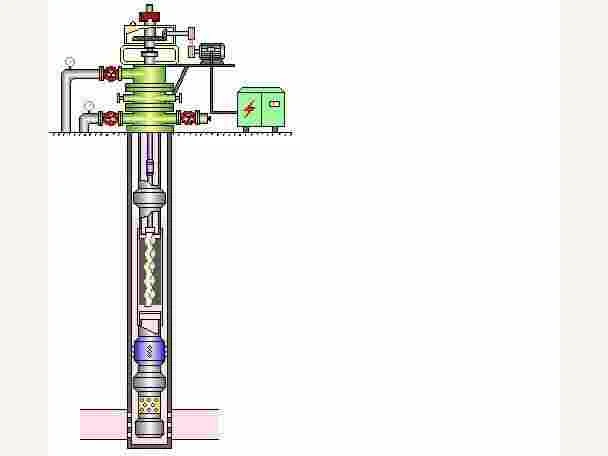
A PCP is a single-screw positive displacement pump driven by a rod string from surface. It produces a fixed volume per revolution regardless of back pressure, and it tolerates viscous fluid and sand better than any other lift method. Its limit is rod torque and elastomer temperature, which is why 2,000 m is the practical depth ceiling in most fields.
| Criterion | ESP | PCP |
|---|---|---|
| Rate, m3/d | 20 - 2,000 | 5 - 500 |
| Depth, m | to 3,500 and deeper | to 2,000 |
| Viscosity, cP | below 200 | to 5,000 and above |
| Sand tolerance | low to moderate, abrasion stages needed | moderate to high, hardened rotor |
| Gas handling | needs a separator or gas handler above 10% GVF | poor, gas lock at low intake pressure |
| Power supply | grid or generator, 3-phase, stable | surface motor, any prime mover |
| Workover cost | high, cable and string pulled together | low, rods pulled with a workover rig |
| Failure mode | motor or cable, sudden | elastomer or rod, progressive |
Run life is the number we look at first, not the pump price. An ESP in a clean well runs three to five years; in a gassy or sandy well it may run twelve months. A PCP in viscous fluid runs longer than an ESP and fails progressively, which gives the operator time to plan the pull. The cost of a failed ESP includes the cable, the motor and a workover; the cost of a failed PCP is usually a rotor and a rod string.
Where the field has both options, our tie-breaker is the workover spread. A PCP that needs a 900 kN rig every 18 months is cheaper to own than an ESP that needs a 1,800 kN rig and a cable spool every 30 months, even when the ESP has the better run life on paper.
System
System
Model
Model
Application
Not in a single unit. PCP capacity is limited by elastomer speed and rod torque; above about 500 m3/d the answer is an ESP or several PCPs in separate wells.
PCP, with a hardened rotor and an abrasion-resistant elastomer. An ESP needs abrasion-resistant stages and still wears faster than a PCP in the same sand cut.
PCP, by a wide margin. No cable, no motor, no downhole sensor, and the surface drive is a standard prime mover.
Elastomer failure from temperature or from running dry. We see both in the same inspection report. The rod string usually survives; the stator does not.
Both pumps lift liquid from the bottom of the well. In our quoting experience the choice turns on rate, viscosity and what the well does to the pump…