The artificial lift method is decided below the wellhead, and the wrong choice is usually visible in the first month of production rather than in the first week.
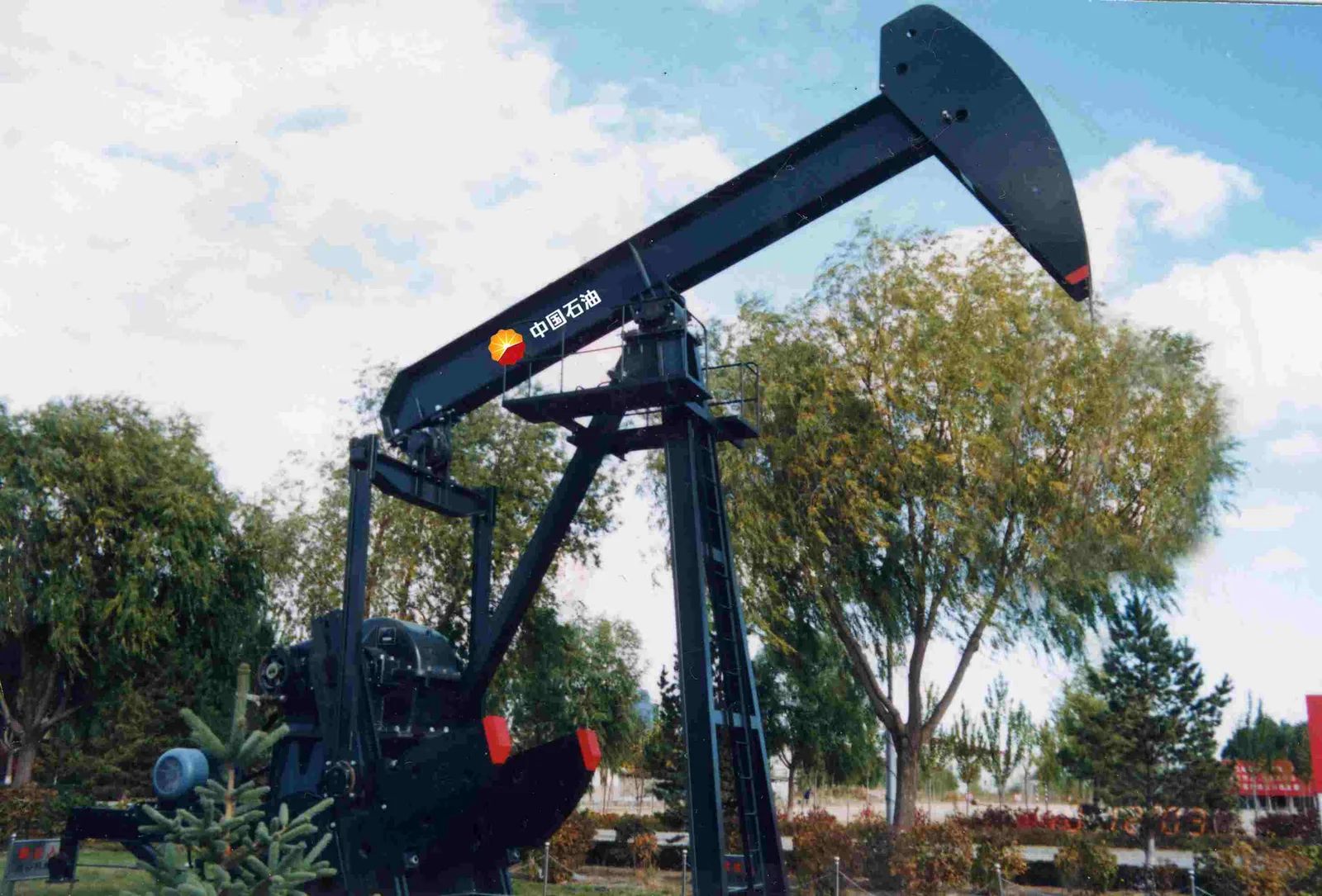
Beam pumping still carries most onshore wells. It tolerates sand, handles low rates economically, and can be repaired with a workover rig that every field already has. The cost sits in the gearbox rating and the electricity bill, which is why the bent-beam geometry exists: curving the beam tail multiplies counterweight positions, so balance is tuned to the well instead of to the nearest available casting. Measured against a conventional unit on the same well, energy losses drop by more than 30 percent.
An ESP is the right answer when rate matters. Strings run from 15 to 4,700 m3/d, to about 3,500 m of head, at working temperatures from 90 to 180 °C, in four body series and more than 200 build combinations. The string is sized for 4-1/2 in through 9-5/8 in casing, and the clearance is checked against the completion diagram before the motor diameter is frozen.
A PCP moves fluid in sealed cavities, so the flow is steady, the shear is low and there is no valve to ball up. That makes it the choice for heavy and viscous oil, sand-laden production and coal-bed methane dewatering. The surface drive head decides how the pump behaves: gear ratio, polished rod load, stuffing box and the brake that holds the string when the motor stops.
What decides between artificial lift methods is rarely one number. It is the combination of inflow rate, depth, sand cut, free gas, viscosity and how often the operator is willing to pull the well.
We size the string and the surface package together, because a motor that suits the well and a switchboard that does not is a failure waiting for a hot afternoon. Our engineers review the completion diagram before the diameter is frozen, we set the drive parameters at commissioning, and we follow the well through its first workover. Our file is updated after that visit, and we send the same engineer back when the well changes. Artificial lift selection starts from the inflow, so we ask for the test data before we quote a string.
At that rate and depth an ESP is usually the economical answer. A beam unit would need a large gearbox and a long rod string carrying high fatigue load, while the ESP puts the stages where the head is needed.
No. Slip changes how the motor follows the crank cycle; torque stays inside the unit rating while peak current draw falls. It is a power-quality measure, not a capacity reduction.
When the fluid level moves through the day and the well pumps off, a fixed counterweight leaves the gearbox fighting a load it cannot match. The flatter torque curve normally pays back inside two to three years.
Partly. A beam unit can usually take a PCP drive head on the same wellhead, but an ESP needs its own switchboard, transformer and cable entry, so the electrical scope is new.
Pumping Units carries the main duty, Downhole Lift and Thermal covers the pressure side, and we quote the three as one scope where they meet on a location.
Product line
Product line
System
System
The artificial lift method is decided below the wellhead, and the wrong choice is usually visible in the first month of production rather than in the…