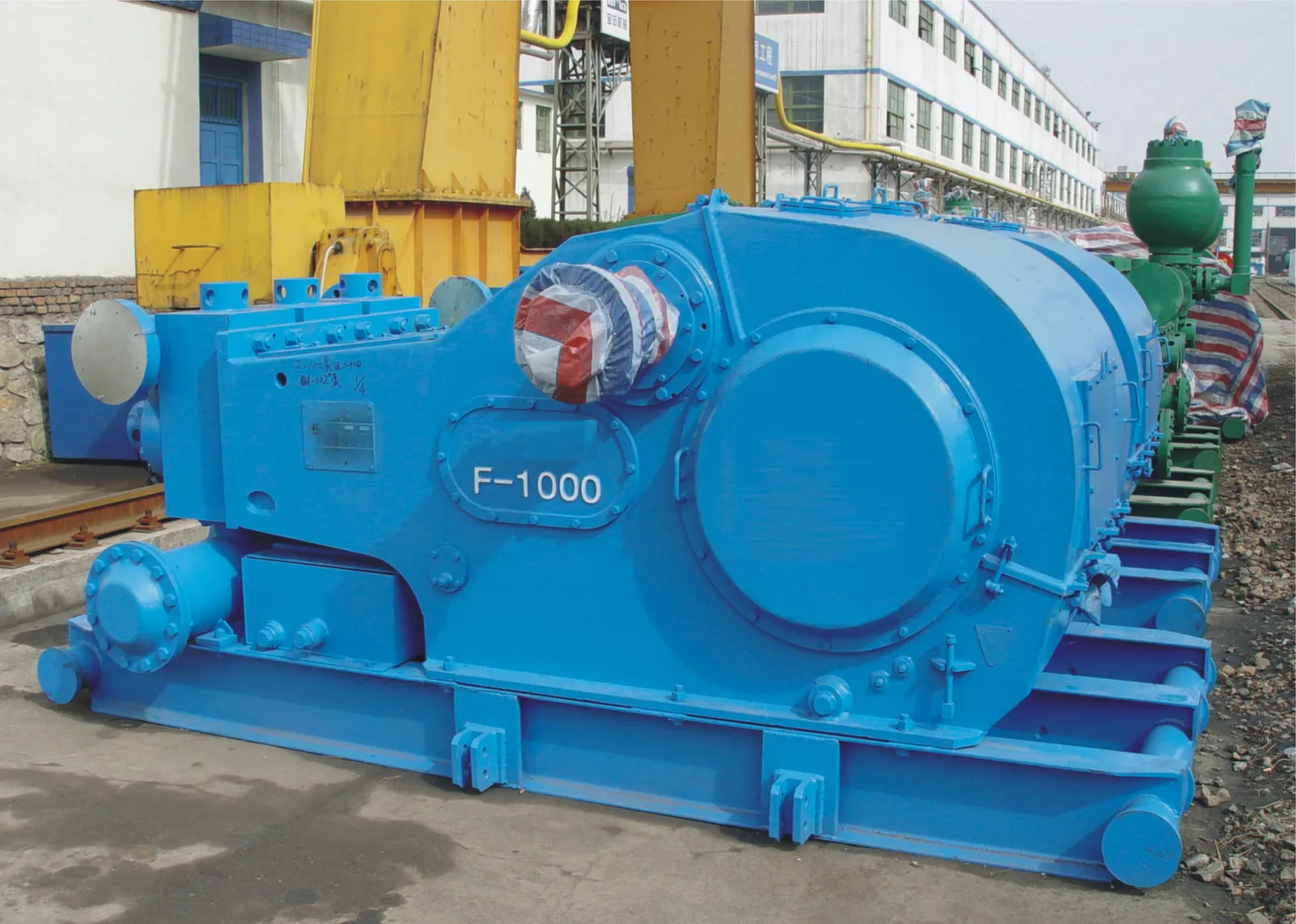
A mud pump is sized by the flow the hole needs at the pressure the string can take. Liner, fluid end and power rating all follow from those two numbers.
Start from the hole, not the pump. Annular velocity carries cuttings: 30 to 50 m/min in a 311 mm hole, 45 to 70 m/min in a 216 mm hole. A 311 mm hole at 40 m/min needs about 3,000 L/min if the drill pipe is 127 mm; the same velocity in a 216 mm hole needs about 1,400 L/min. That is the flow the pump has to hold, continuously, not at peak.
Pressure comes from the circuit, not the pump. Bit nozzles, motor pressure drop, drill string friction and the safety margin add up to a standpipe pressure that is usually 18 to 35 MPa on land, higher when a mud motor or a long horizontal section is in the string. The pump must deliver the flow at that pressure with 90 percent volumetric efficiency, which in practice means choosing the next liner down rather than running the largest liner at its limit.
| Hole size, mm | Flow, L/min | Standpipe, MPa | Pump class |
|---|---|---|---|
| 444.5 | 2,400 - 3,200 | 16 - 24 | F-1300 / F-1600 |
| 311.1 | 2,600 - 3,400 | 18 - 28 | F-1300 / F-1600 |
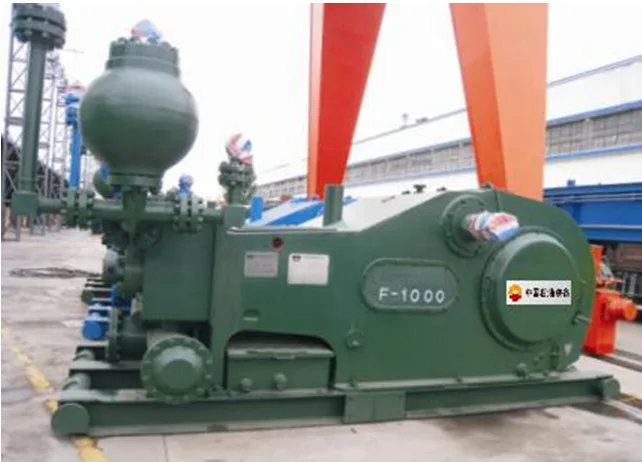
| 215.9 | 1,300 - 1,800 | 25 - 35 | F-800 / F-1000 |
| 152.4 | 700 - 1,000 | 30 - 40 | F-500 / F-800 |
| Horizontal, 215.9 | 1,400 - 2,000 | 28 - 38 | F-1000 / F-1300 |
Triplex or quintuplex is a decision we take separately, and it changes the discharge profile, not the duty. A triplex pump gives three pulses per revolution and a larger pressure swing; a quintuplex gives five and a smoother line, at a higher price and a longer fluid end. The comparison page sets the two side by side on the numbers that matter at the standpipe.
Two checks are worth doing before we place the order: confirm the suction line and the damper volume against the planned flow, and confirm that a spare fluid end, liner set and valve set are held for the first 500 hours. In our experience on land, most pump downtime is fluid end wear, not power end failure, and the wear rate doubles when the pump runs above its rated pressure to compensate for a worn liner.
Model
Model
Model
Model
Model
Ten to fifteen percent above the calculated annular requirement. Below ten, cuttings load the annulus as the hole cleans; above twenty, the pump runs outside its efficient liner range and the fluid end wears faster.
Yes, with two liner sets, and we supply both. A 311 mm hole and a 216 mm hole differ by roughly a factor of two in flow, so the pump runs a large liner in the first section and a small liner in the second, both within the same power end rating.
At the lower of the pump fluid end rating and the standpipe rating, usually 10 percent above the maximum planned circulating pressure. We set it at the lower of the two, which protects the pump and the surface line together.
Volumetric efficiency below 90 percent, a rising discharge temperature, or a pressure that will not hold at constant flow. Any of the three means the liner or the valve set is worn and the pump is being asked for more than it can deliver.
A mud pump is sized by the flow the hole needs at the pressure the string can take. Liner, fluid end and power rating all follow from those two…