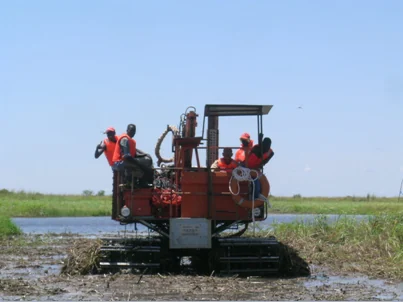
Seismic crew vehicles for desert, mountain, swamp and shallow-water work: recording trucks, crew carriers and buggy-mounted drills built to the terrain.
Bodies and drive configuration are fixed by the terrain and the crew; the rows below are the choices that decide the build.
Figures taken from the Seismic Crew Vehicles data sheet issued by BOMCO. Values are nominal and the quotation confirms the build for your order.
A seismic crew lives or dies by its transport. In a desert the limit is flotation and fuel; in mountains it is the grade and the width of the track; in a swamp it is the ground pressure. The group's geophysical works builds special transport equipment for exactly those four environments, alongside the vibrators and drills the crews use.
Vehicles are specified from the survey, not from a chassis list: how many people, how much cable, which drill, and how long the crew stays out between resupplies.
On soft ground the swamp body does the work: hydrostatic drive, a lightweight structure that trades steel for payload, and independent watertight float compartments that keep reserve buoyancy if one section is holed. Ground pressure stays low while tractive force stays high, so the unit crosses beach and marsh where a wheeled truck would dig itself in. The same body carries the drill, the cable-laying and line-checking gear, the instrument boxes and the explosive boxes.
We build the body around the crew it serves, so cable reels, seating and water capacity stay in proportion instead of being oversized on one chassis and short on another. Our drill carriers are matched to the vehicle, which keeps the rig, the mast and the rod rack as one unit between shot points. A truck that cannot cross the ground it is meant for is not a saving, and we will not propose one to make a budget work. Walk us through the terrain report before a chassis is quoted; our field engineers go over it with the crew that will drive it. We would rather build fewer bodies that fit than a fleet that does not. Our crews know the difference between a track kit that helps and one that only adds weight, and we spec accordingly. Tell us the resupply interval and we size the fuel and water bodies to it.
Because a standard truck either cannot cross the ground or destroys it. Ground pressure, grade and fuel range are the three numbers that decide the chassis, and they come from the survey area rather than from a dealer's specification sheet.
Yes. Buggy and truck-mounted drills are matched to the carrier so the rig, the mast and the rod rack are one unit, which shortens the move between shot points.
Recording truck, crew carriers, drill carriers, bowsers and workshop bodies can be quoted as one convoy with a single spares list and one maintenance routine.
Each body is built against the crew it serves, so cable reels, seating and water capacity stay in proportion instead of being oversized on one chassis and short on another.
Vehicles are delivered with the field maintenance schedule and the spares list for the terrain they were built for.
A desert seismic vehicle and a swamp unit are different builds, and the seismic crew vehicle we quote follows the terrain report rather than the chassis catalogue.
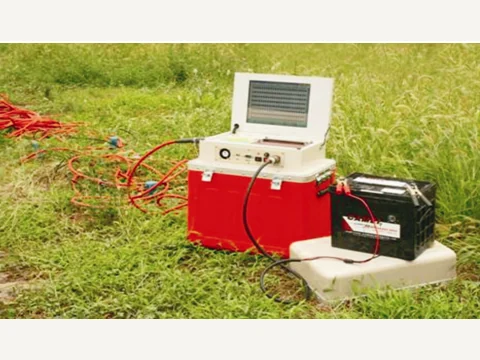
Acquisition system