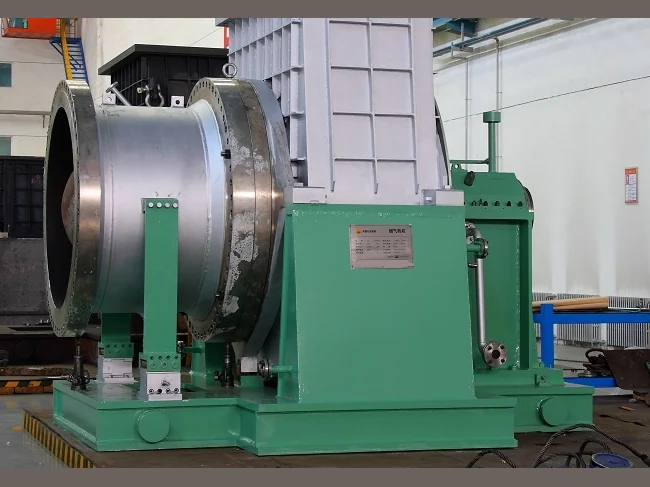
Flue gas expanders recover power from FCC regenerator off-gas: single-stage 78 to 81 percent, two-stage 82 to 84 percent efficiency, hot parts rated past 100,000 hours.
Stage count follows the gas conditions and the power you want to recover; the two rows below are the efficiency bands for each build.
Figures taken from the FCC Flue Gas Expanders data sheet issued by BOMCO. Values are nominal and the quotation confirms the build for your order.
The expander takes the hot, pressurised flue gas leaving a regenerator and expands it through a turbine to drive the air blower or a generator. It is the largest single power recovery item in a refinery, and its economics turn on efficiency, availability and how long the hot parts last between overhauls.
The design is a cantilever rotor so the hot section can be removed without disturbing the bearing train, and rotor dynamics are proven against the vibration limits the refinery standards impose.
We balance and vibration-test the machine before dispatch and hand over the record with the certificate book. Our hot-section design is checked against the erosion rate your gas clean-up actually delivers, and we size the stage count from that analysis rather than from a catalogue band. If the recovered power does not justify a second stage we will say so, because the payback is yours to live with. Show us the gas analysis and the stage selection follows from it. Our engineers review the erosion record before we commit to an overhaul interval. We would rather lose a point of efficiency than a week of availability, and we say which one a build costs.
Two stages where the gas conditions and the recovered power justify the extra train, because the efficiency band moves from 78 to 81 percent up to 82 to 84 percent. Single stage is the right answer for smaller units and for gas conditions where a second stage adds little.
Fines erode the blade path, so blade material, coating and the gas clean-up ahead of the machine are specified together. The overhaul interval follows from the measured erosion rate, not from a fixed calendar.
Cantilever, which means the hot section can be lifted out for inspection and blade work while the bearing train stays in place.
The machine is balanced and vibration-tested before dispatch, and the record is handed over with the certificate book.
Blading, seals and the hot-section bolting are quoted as a spare set, because they set the turnaround duration rather than the machine price.
A flue gas expander FCC operators rely on for power recovery is a power recovery turbine refinery units run continuously, so the overhaul plan is agreed with the turnaround schedule.
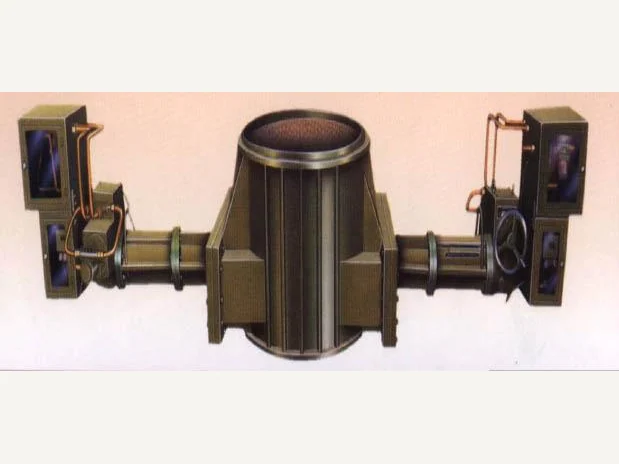
Refinery valve