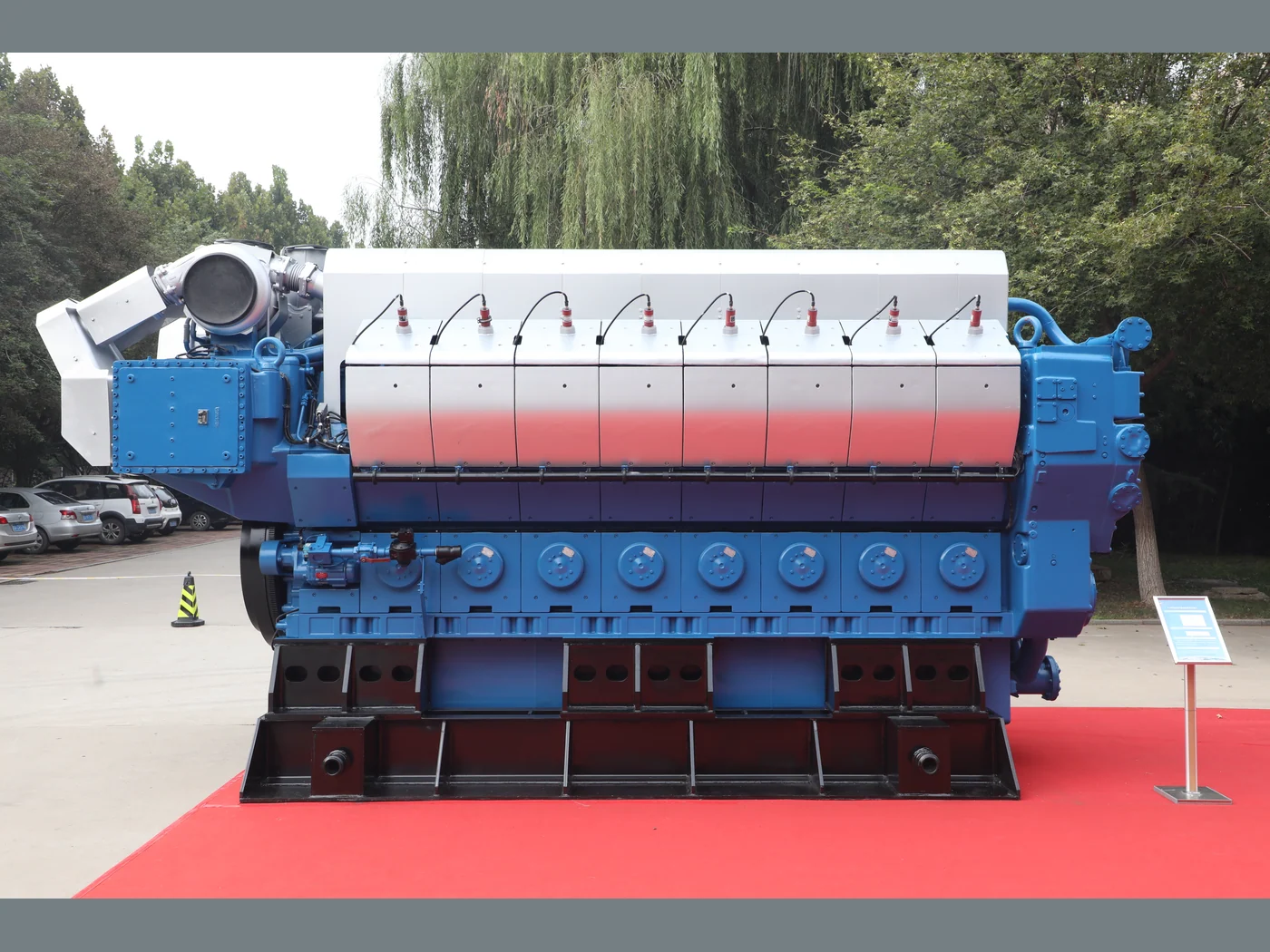
26/32 series medium-speed engines for pipeline compression, platform power and captive plants: lean-burn gas versions at 44 percent thermal efficiency.
Figures are for the lean-burn gas version of the 26/32 family. Diesel variants share the block and are quoted against the duty you describe.
Figures taken from the 26/32 Series Medium-Speed Engines data sheet issued by BOMCO. Values are nominal and the quotation confirms the build for your order.
The 26/32 family is a 260 mm bore, 320 mm stroke medium-speed engine, built in gas and diesel versions on the same block. The gas version was developed for pipeline compressor drive, offshore platform power, large gas-fired stations and distributed energy, where fuel cost and emissions decide the project rather than the engine price.
What makes the gas engine work is the combustion control: a lean burn held at a controlled excess-air ratio, two-stage charge air cooling, and an injection system that trims each cylinder rather than the engine as a whole.
We set the rating point on the works test bed and write the fuel and exhaust figures into the contract, so the number you buy is the number we measured. Our gas train, double-wall piping and detection system are supplied as one package, which keeps the safety case on the whole fuel path. Where a station has no gas tap we would advise a diesel unit instead of a derated gas engine, and we say so at the enquiry. Send the duty data and the test curve comes back with the rating point on it. We keep our bed records, so a repeat engine behaves like the first one.
Gas wins where the fuel is available at the site and the running hours are high, because the specific cost per kWh is lower and the emissions are far lower. Diesel is the better answer for remote stations without a gas tap or for standby duty.
From the absorbed power at the design suction and discharge pressures, with a margin for fouling and ambient temperature. We return the rating point and the coupling arrangement, and the compressor package is sized to the same point.
The lube filter elements clean themselves, so the routine work is valve and spark-plug scope at the intervals in the manual. Cylinder balancing is done from exhaust temperature, which means no special tooling on site.
The engine is run on the test bed at the rating point you order, and the fuel consumption and exhaust figures in the test record are the ones written into the contract.
Gas train, double-wall piping and the detection system are supplied as one package, so the safety case covers the whole fuel path rather than the engine alone.
A medium speed diesel engine manufacturer is judged on the fuel curve, so we quote the medium speed diesel genset with the test-bed figures attached.
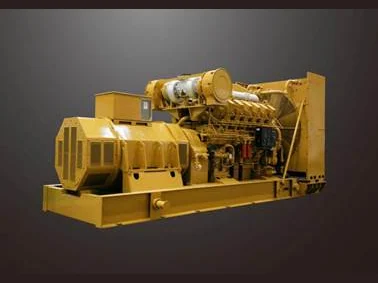
Generator set