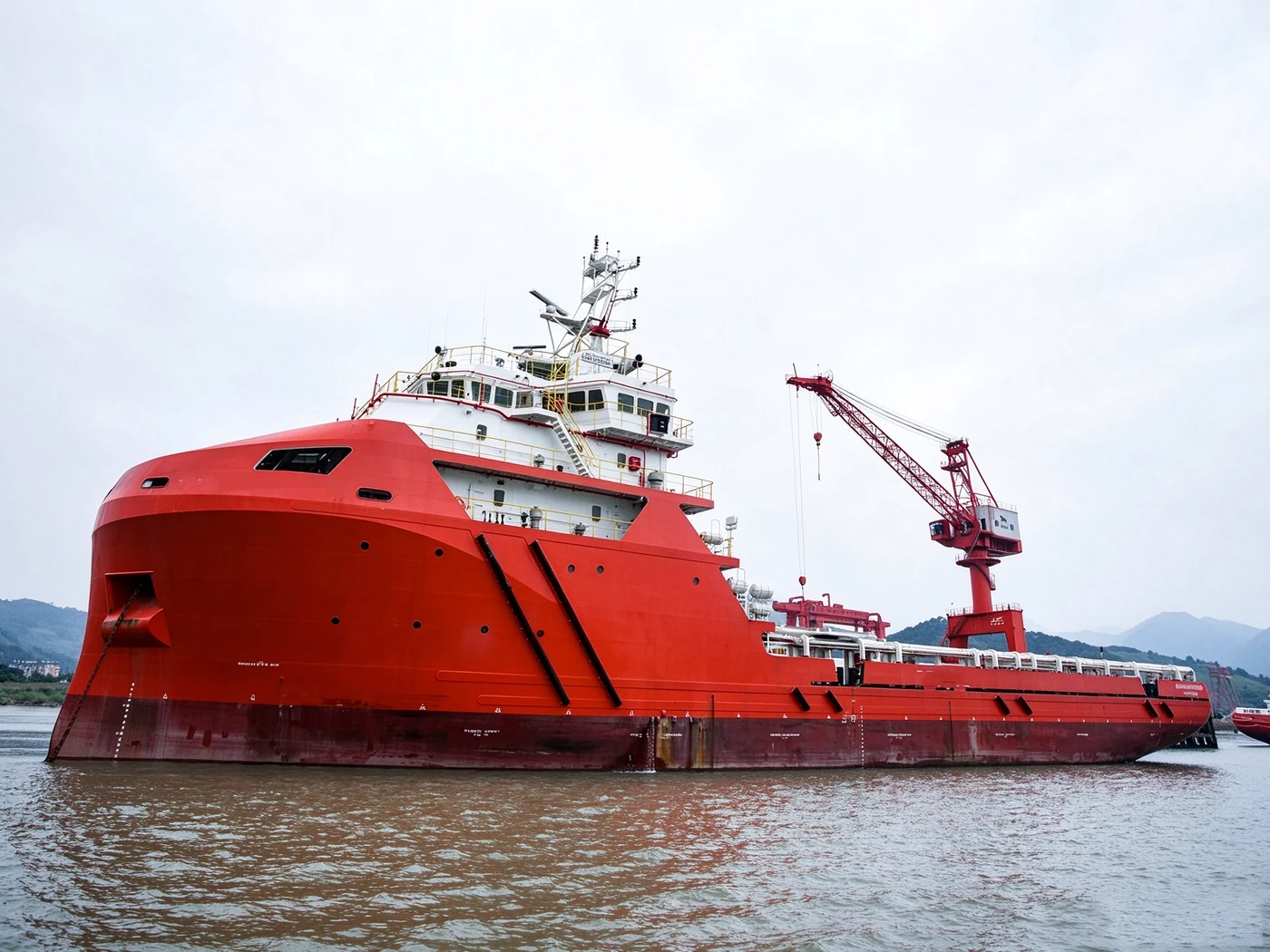
Platform supply vessels, anchor handling tug supply and multipurpose offshore support vessels built for field logistics, towing and construction support.
Deck area, tank capacity and bollard pull come from the charter duty; the rows below show which items are settled at enquiry.
Figures taken from the Offshore Support Vessels (PSV / AHTS / OSV) data sheet issued by BOMCO. Values are nominal and the quotation confirms the build for your order.
A field needs three different ships on the same day: one to carry mud, cement, fuel and deck cargo to the platform, one to move the anchors and tow the rig, and one to support construction, diving or ROV work. The hull forms differ, but the commercial problem is the same, which is matching deck area, tank capacity and station-keeping to the field rather than to a catalogue.
We quote these vessels through the group's marine works, where the hull, the deck equipment and the power package are specified as one design against the charter duty you describe.
The engineering vessel line this comes from covers exploration, drilling, dredging, wind installation, power barges, platform supply and product tanker hulls, with deadweight up to 50,000 t and classification to CCS, ABS or DNV as the owner requires. Two reference hulls show the spread: a product tanker with twelve cargo tanks, a slop pair and a double bottom and double hull in the cargo region, and a shallow-water airgun source vessel with an airgun deck aft, twin engines, twin fixed-pitch propellers and twin streamlined rudders.
We start from the field rather than from a stock hull, because resupply cycle, rig move distance and construction support scope set the three dimensions that matter. Our concept design returns deck area, tank capacity and bollard pull against the duty you describe. When the schedule is tight we price newbuild and chartered tonnage side by side, and we tell you which one carries the delivery risk. Hand us the field data and the deck plan comes back with it. Our marine engineers walk the charter duty with you before a hull is fixed.
Yes, and that is the usual route. Send the field layout, the platform consumptions and the rig move plan; deck area, tank capacity and bollard pull are then fixed from those numbers and returned as a concept design with a price.
Where both are in one enquiry we do. The deck cargo handling on the platform and the cargo arrangement on the ship are then designed against each other, which removes the usual interface argument at the quay.
Charter terms, crew supply and the maintenance plan are agreed with the operating company; the vessel is delivered with its class certificates and a planned maintenance schedule.
The enquiry starts from the field, not from a stock hull: resupply cycle, rig move distance and construction support scope set the three main dimensions.
For a fast schedule we can price a chartered unit alongside a newbuild, so production is not held up while the yard slot is found.
An offshore support vessel builder has to answer for the deck layout as well as the hull, so the platform supply vessel and the anchor handling vessel are specified against the cargo they carry and the anchors they move.
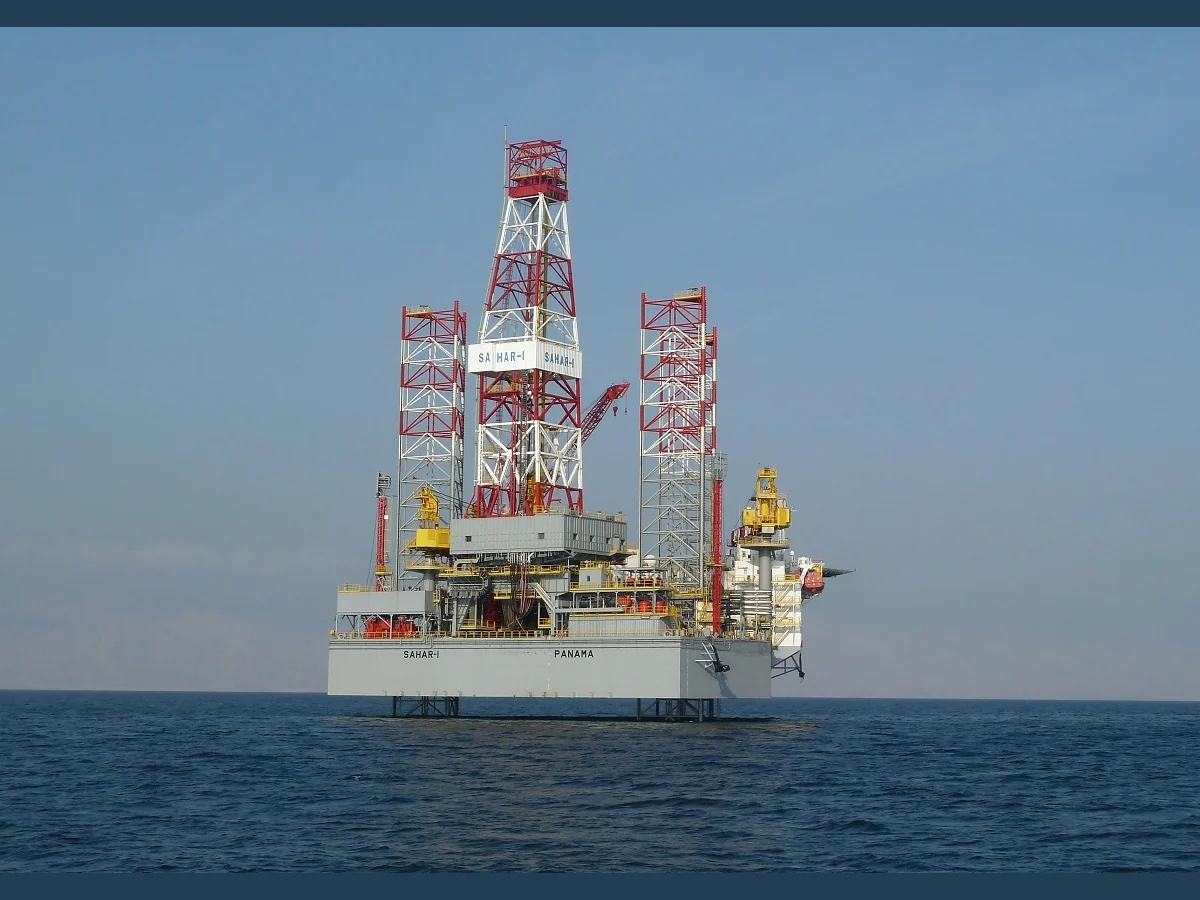
Offshore drilling unit